The short version
- Feel the Sound, an exhibition about how we sense and feel sound, opens at MoN Takanawa in Tokyo on November 20 and runs until March 22.
- It was first shown at the Barbican in London, which curated it, and this is its first showing in Japan.
- General admission is 2,500 yen, with a pre-sale price of 2,300 yen until November 19.
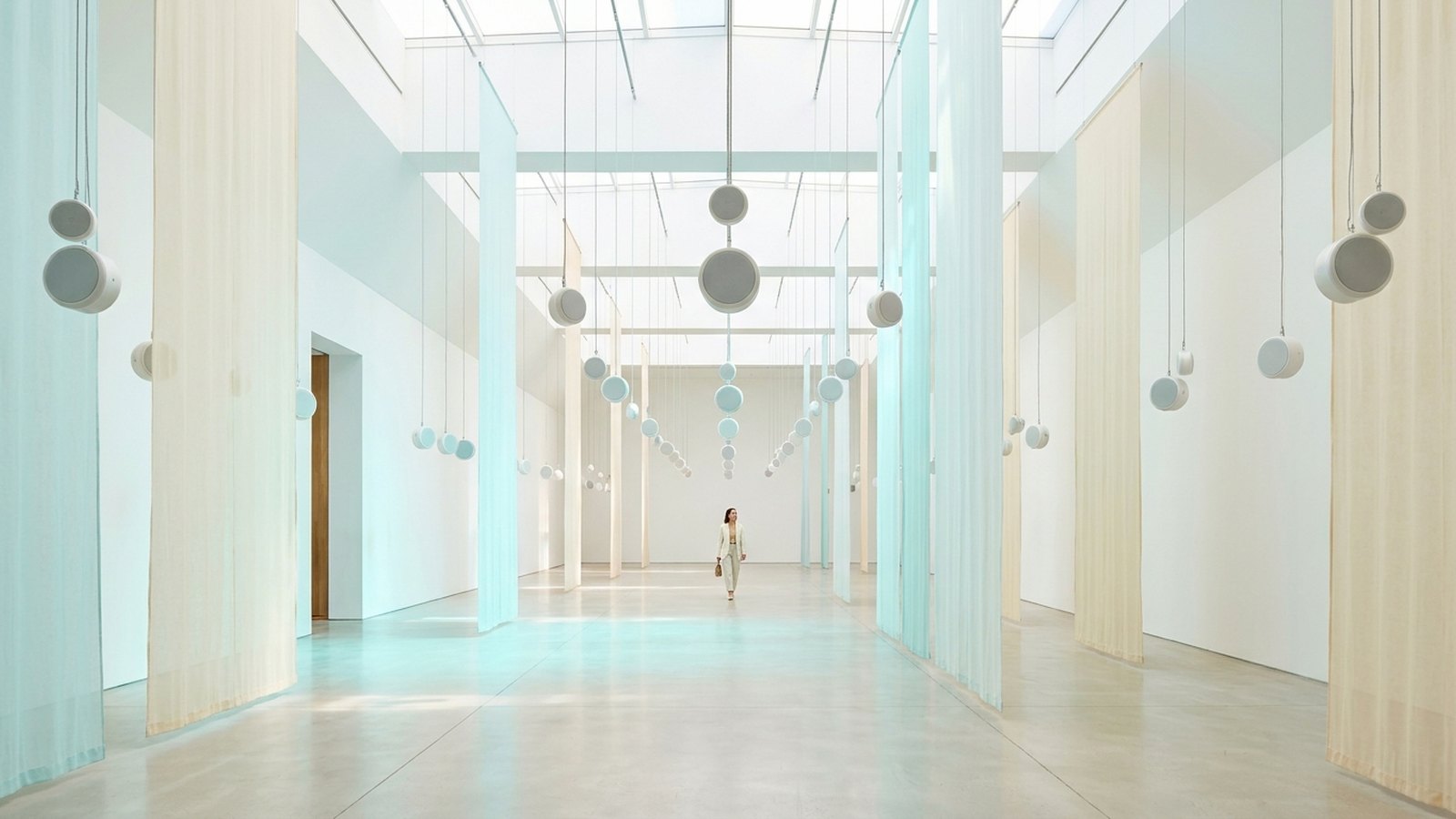
Feel the Sound, the immersive exhibition the Barbican Centre first staged in London, opens its first run in Japan on November 20 at MoN Takanawa: The Museum of Narratives, at Takanawa Gateway City in Tokyo. It fills Box1500 on the fifth floor until March 22, 2027. The venue describes it as “an immersive experience that allows visitors to feel and experience sound.”
Three works are described so far. Sensing Streams: invisible, inaudible, by Ryuichi Sakamoto and Daito Manabe, picks up the electromagnetic waves our devices fill the air with and turns them into sound and light. Max Cooper’s Reflections of Being builds music, video and text from anonymous answers to what people feel they cannot say in daily life. Resonance Continuum, by the Indian duo Elsewhere in India, draws on Indian music, crafts and digital tools. The venue lists some 30 artists and groups in all, among them Evelyn Glennie, Holly Herndon, Ei Wada, Yuri Suzuki and Raymond Antrobus, and notes that details may change.
It is open 10:00 to 19:00, until 21:00 on Fridays and Saturdays. General tickets are 2,500 yen, 2,300 yen before November 20; under-25s pay 1,100 yen, school students 550 yen, and visitors with a disability certificate and one companion go free.